in the context of accelerating digitalization and cloudification, "examining the protection mechanisms and compliance processes of japanese cloud servers from a security compliance perspective" provides structured analysis for companies that want to deploy or use cloud services in the japanese market. the article focuses on legal requirements, technical controls, and compliance processes to help security and compliance teams formulate implementation strategies and governance measures.
japan takes personal information protection regulations as its core, and supervision has clear requirements for personal data processing, cross-border transmission and third-party entrustment. the security compliance of cloud services in japan needs to be combined with national regulations, local regulations and industry guidelines to complete compliance mapping and transform legal requirements into executable technical and management controls.
for data sovereignty and privacy protection, enterprises should evaluate data classification, sensitivity and cross-border transmission risks. measures such as data minimization, anonymization, and encryption are adopted, and data location and transmission guarantees are clarified at the contractual and technical levels to meet japanese regulatory expectations for the protection of personal information.
network and infrastructure protection emphasizes segmentation isolation, border defense and anti-ddos capabilities. intrusion detection, traffic monitoring, encrypted transmission and backup strategies should be deployed to ensure that cloud instances and storage achieve multi-layer protection at the network, computing and physical levels to reduce the risk of lateral intrusion and single point failure.
access control needs to implement role-based least privileges, strong authentication and multi-factor authentication. strict control and session auditing of privileged accounts, combined with periodic access review and automated permission recovery, reduce the risk of data leakage or misoperation due to identity abuse.
effective monitoring and log management include centralized log collection, real-time alarms and complete audit links. logs should be tamper-proof and have a reasonable retention period, and should be connected with the incident response process to ensure that compliance disclosure and evidence collection requirements can be met when discovering, locating, and reporting security incidents.

the compliance process needs to include compliance assessment, risk governance and supplier due diligence. verify the effectiveness of controls through regular internal audits, independent third-party assessments and penetration testing, and clarify responsibilities, data processing terms and audit authority in the contract to ensure continued compliance.
the overall recommendation is to carry out risk mapping based on "examining the protection mechanism and compliance process of japanese cloud servers from a security compliance perspective", prioritize data classification, encryption and access control, and combine continuous monitoring and third-party assessment to form a closed loop. it is recommended to work with local legal counsel and compliance teams to regularly review and optimize controls to respond to changes in regulations and threats.
- Latest articles
- The Leasing Terms And Exemptions Of The Hong Kong Station Cluster Must Be Verified Before Signing The Contract
- Affordable U.S. High-defense Server Operation And Maintenance Strategy Includes Automation And Cost Optimization Methods For Monitoring
- How SMEs Can Choose Vietnam Site Cluster Servers: Cost-performance And Technical Support Evaluation
- When Choosing A Xingtai VPS Hong Kong Server, You Need To Evaluate The Quality Of Service And After-sales Standards
- How To Determine Which US Server Hosting Provider Is Best Suited Through Trials And Speed Tests
- FAQ Collection: Infinite Rule + Thailand Server Disconnection And Lag Solutions
- Guide: How Chinese Users Can Handle Cross-border Latency And Login Issues On Korean Servers
- Recommended Operations And Monitoring Tools For Purchasing Cloud Servers In Thailand
- What To Do If A Hong Kong Data Center Goes Down, Quickly Pinpoint The Cause And Activate Backup Measures
- Comparing The Advantages And Disadvantages Of Singapore Cloud Server VPS Versus Dedicated Servers Helps You Make A Choice
- Popular tags
-

Cost-effectiveness Comparison Of The Cost-effectiveness Of Japanese Diamond Vps And Ordinary Solutions
compare the cost performance of japanese diamond vps and ordinary vps solutions from the dimensions of cost structure, performance and bandwidth, scalability, security maintenance, etc., and provide selection suggestions for different business scenarios. -

A Comprehensive Comparison Of Japanese VPS And Korean VPS
A comprehensive comparison of the performance, price, support, and use cases of Japanese VPS and Korean VPS to help users choose the suitable virtual private server. -
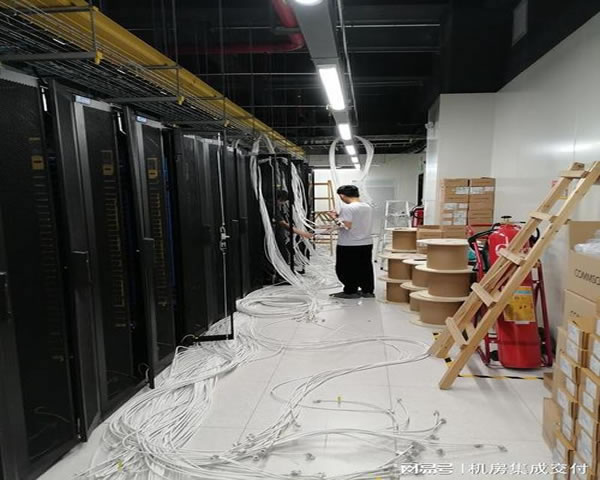
Case Study: Which Japanese Cloud Server Provider In Shuozhou Is The Best? Real Customer Stories Of Successful Deployments
Through a real-world deployment case of an enterprise in Shuozhou using Japanese cloud servers, this article analyzes key aspects such as selection, networking, security, performance, and operation and maintenance. It aims to help local users determine which Japanese cloud servers are the best for use in Shuozhou and provide practical recommendations.